




You need 70 out of 100 to pass the UBC real estate exam.
Sounds simple.
Here's what nobody tells you: most students who fail weren't unprepared. They were wrongly prepared.
They memorized answers just like you instead of learning concepts. They skipped the math until week 9. They brought the wrong calculator. They ran out of time on question 74.
These aren't intelligence problems. They're preparation problems — and every single one is fixable before your exam date.
Here are the most common mistakes BC real estate students make on the UBC licensing exam — and exactly how to avoid each one.
Mistake #1: Memorizing Questions Instead of Understanding Concepts
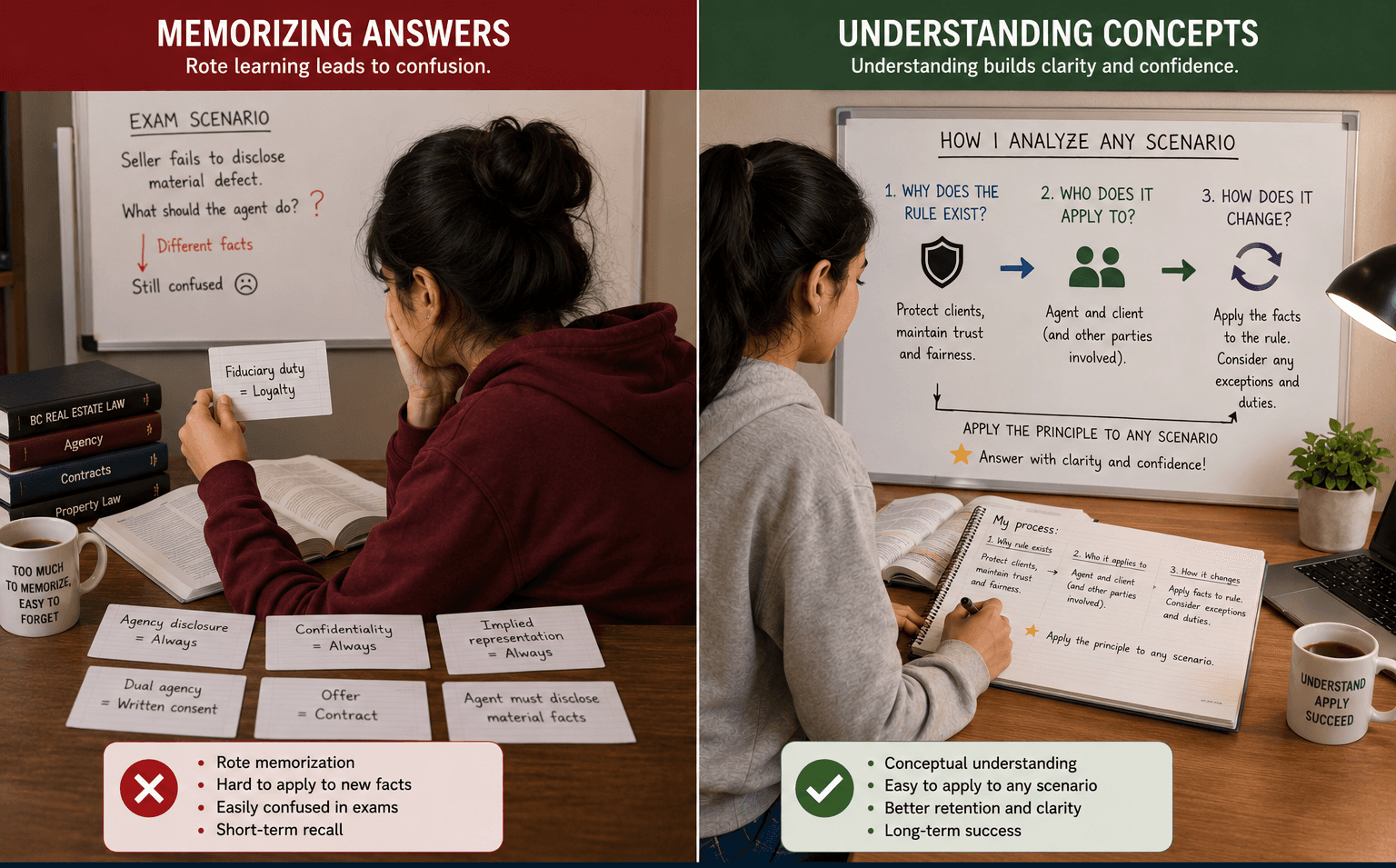
This is the most common reason students fail the real estate exam in BC — and the hardest one to catch yourself doing.
It feels productive to grind through 500 practice questions. But if you're memorizing the answer to that specific question, you're building a false sense of readiness.
Why UBC's Scenario-Based Questions Trip Up Memorizers
The UBC licensing exam doesn't repeat questions verbatim. It changes the scenario — the parties involved, the timing, the perspective. A question about a listing agent's disclosure duty might show up next as a buyer agent's duty in a competing offer situation.
If you memorized "the listing agent must disclose X," you'll freeze when the question becomes "does the same rule apply to the buyer agent in this situation?"
Understanding the principle — not the answer — is what the exam actually tests.
What "Concept-First" Studying Actually Looks Like
For every rule or legal concept you study, ask yourself three questions:
Why does this rule exist? (What harm is it preventing?)
Who does it apply to? (Listing agent? Buyer agent? Brokerage?)
How does it change if the scenario shifts?
This takes longer upfront — but it means you can answer questions you've never seen before.
Students at the BC School of Real Estate who switch from memorization to concept-based learning consistently report a shift in confidence during mock exams. One student described it simply: without clear explanations of why rules work the way they do, the exam feels like guesswork — with them, it finally made sense. That's the difference a structured approach makes.
Mistake #2: Leaving Math Prep Until the Final Week

Math questions on the UBC real estate exam course are worth the same marks as any other question — but they take longer to answer and punish rushed preparation.
Students who leave math until the last week run into two very specific traps.
The Two Math Traps Most Students Miss
Trap 1 — Ignoring rounding instructions. A question might say "round to the nearest dollar" or "express as a percentage to two decimal places." Students who skim the question and calculate correctly — but round wrong — lose the mark entirely. The math was right. The answer was wrong.
Trap 2 — Interest rate conversion errors. A question might list a mortgage at a stated rate compounded semi-annually, then ask for the effective annual rate. Many students apply the stated rate directly. That's the wrong number — and it's a trap the exam uses intentionally.
A Simple 2-Week Math Practice Routine
Week 1: Cover one math topic per day (interest rates, mortgage calculations, net proceeds, GST/PTT). Use your course materials, not outside resources.
Week 2: Do timed mixed-question sets. Simulate exam pressure — no calculator shortcuts, strict time limits.
The goal isn't to love math. It's to make these calculations automatic before exam day.
Mistake #3: Underestimating Ethics and Agency Law
Ask any student which section they studied least — it's almost always ethics.
It feels soft. Hard to test. Easy to skim. But ethics and agency law questions make up a significant portion of the UBC real estate exam, and they're the hardest to get right through memorization alone because the answer almost always depends on context.
Why Ethics Questions Are the Hardest to Memorize
The exam won't ask: "What is the definition of fiduciary duty?"
It will ask: "In this specific situation, which of the following actions does the agent's fiduciary duty require?"
That's a completely different skill — one that requires you to understand the principle well enough to apply it under pressure.
How to Approach Scenario-Based Ethics Questions
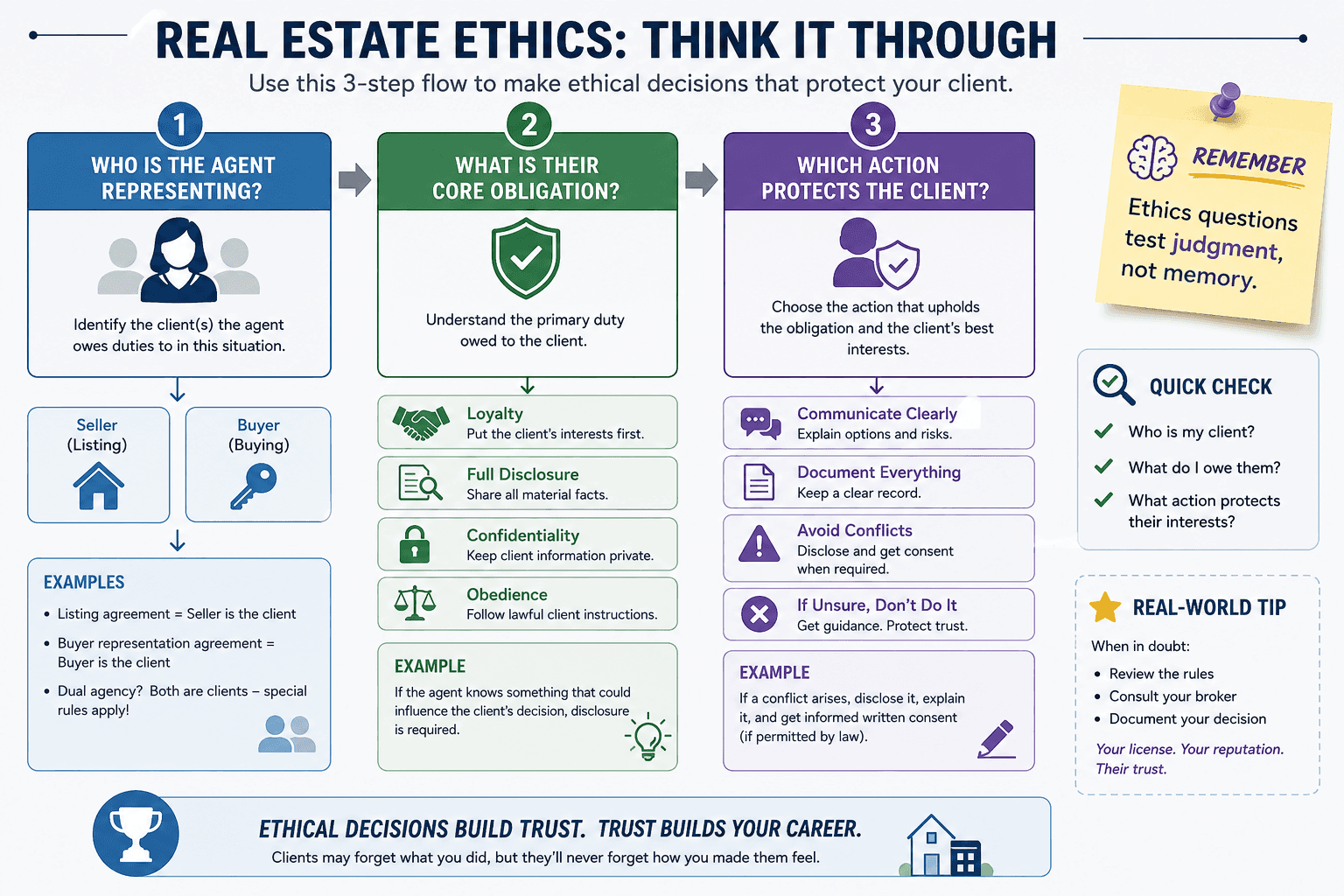
Use a simple three-step filter when you hit an ethics question:
Who is the agent representing? (Their duty flows from this.)
What is the agent's core obligation in this moment? (Loyalty, disclosure, confidentiality?)
Which answer best protects the client this agent is representing?
This won't work for every question — but it gets you to the right answer more often than second-guessing.
Exploring common mistakes new agents make in BC after the exam phase is just as useful — the same misunderstandings that hurt exam performance often follow new agents into their first months in the field.
Mistake #4: Wrong Calculator and Poor Time Pacing on Exam Day
Two exam-day mistakes that have nothing to do with your knowledge — and everything to do with preparation.
The Calculator Mistake That Disqualifies Your Work
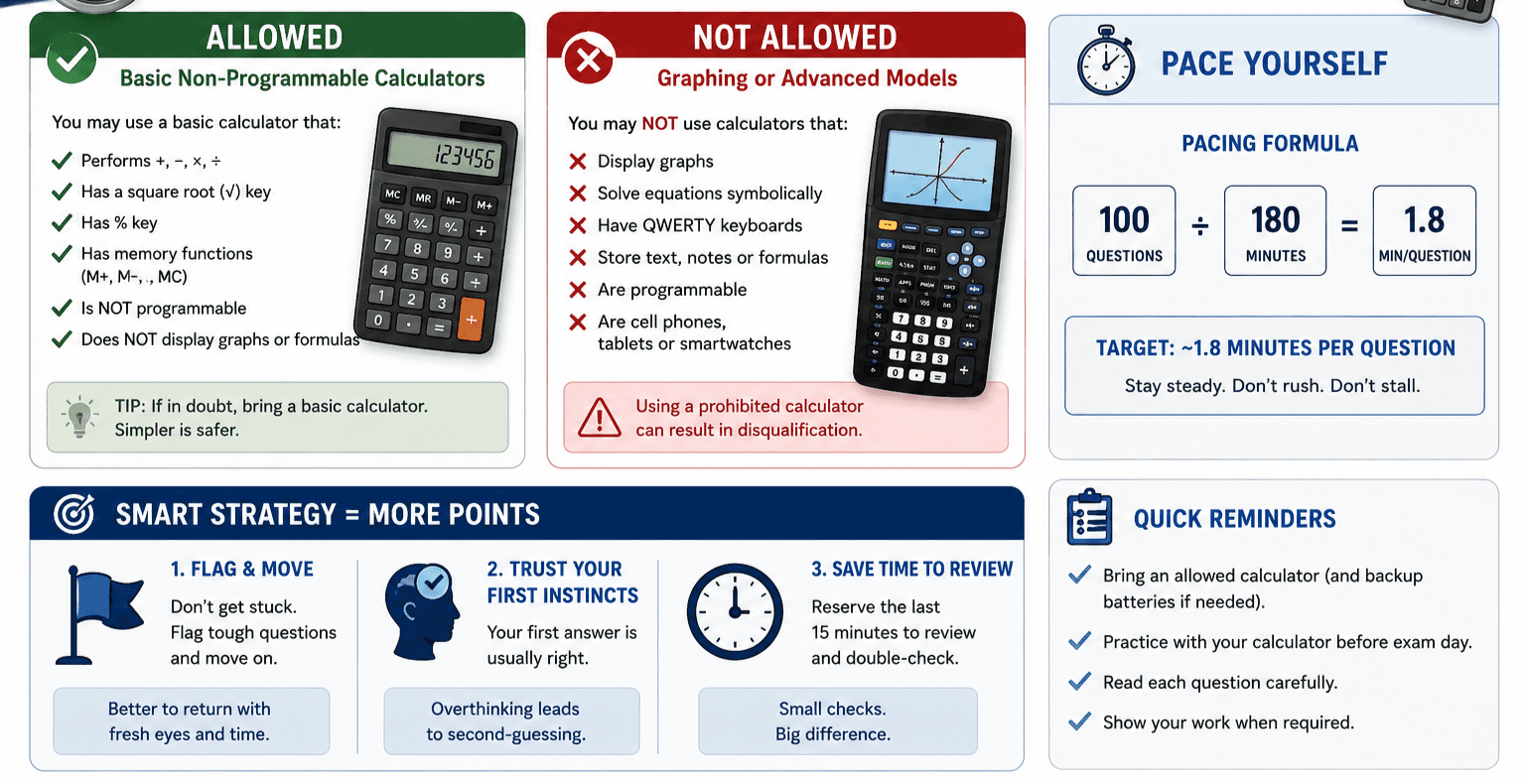
The UBC Real Estate Division strictly prohibits alphanumeric and programmable calculators in the exam room. Graphing calculators are also banned.
Many students bring the calculator they studied with — without checking whether it's on the prohibited list. If your calculator is disqualified at the door, you're writing a math-heavy exam by hand.
Fix: Confirm your calculator model is permitted well before exam day. Practice with it consistently so there are no surprises.
How to Pace Yourself Through 100 Questions in 3 Hours
That's 1.8 minutes per question — less than you think.
A simple pacing strategy:
Flag and move. If a question takes more than 90 seconds, mark it and come back. Don't let one hard question steal time from five easy ones.
Don't second-guess early answers. Research consistently shows that first instincts on multiple choice are more reliable than overthinking.
Reserve the last 15 minutes for flagged questions only.
Build this habit during mock exams — not on the real day.
Mistake #5: Studying Without a Structured Plan (Especially for Working Professionals)
Grinding through the UBC course manual without a plan is one of the most common and most invisible mistakes students make.
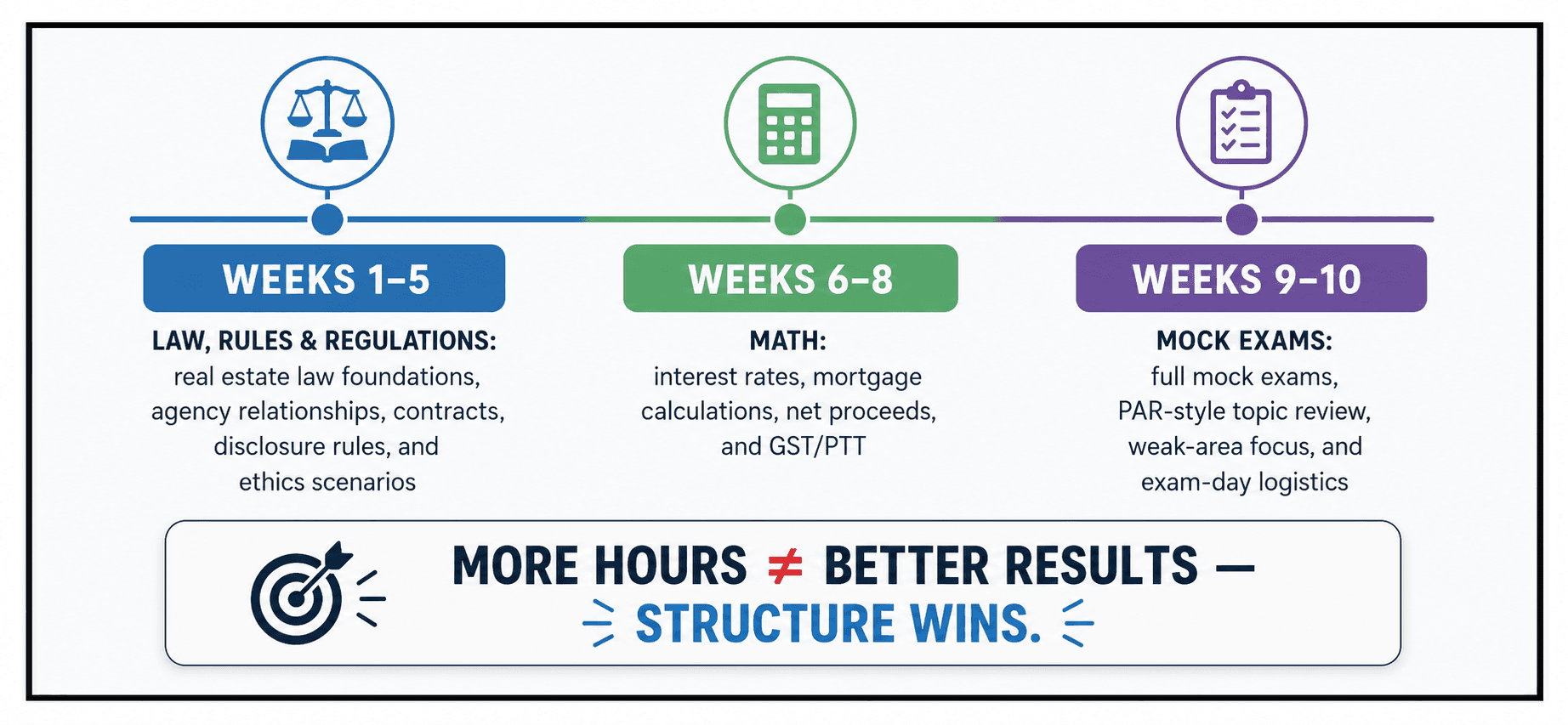
More hours ≠ better results. Unfocused study builds familiarity with the material, not readiness for the exam.
Building a Realistic 10-Week Study Schedule
Here's a simple framework that works for people studying while working full-time:
Week | Focus |
1–5 | Law, Rules & Regulations: real estate law foundations, agency relationships, contracts, disclosure rules, and ethics scenarios |
6–8 | Math: interest rates, mortgage calculations, net proceeds, and GST/PTT |
9–10 | Mock Exams: full mock exams, PAR-style topic review, weak-area focus, and exam-day logistics |
The UBC Real Estate Trading Services course allows up to one year to complete assignments — which is flexible. But without a personal deadline, many students drift and arrive at the exam underprepared.
How a Structured Online Course Helps You Pass on the First Attempt
Self-studying the 800+ page UBC manual is possible — but it's slow, isolating, and doesn't give you feedback on whether you actually understand the material.
A structured real estate exam course helps by condensing the material, building in regular checkpoints, and flagging the exact topics the exam tests most heavily.
Students who follow a structured program — like those who've gone through Realty Course — consistently describe the difference as going from reading a lot to actually understanding.
If you're juggling a job and exam prep, exploring how myths about real estate courses can derail your prep is worth your time — many of the assumptions students carry about online learning are simply wrong.
You Can Pass the UBC Real Estate Exam — With the Right Approach
Most students who fail the UBC real estate exam in BC don't fail because the exam is impossible. They fail because they memorized instead of understood, skipped the hard topics, or walked in underprepared for the format.
Every mistake in this post is fixable — and fixable before your exam date.
Over 10,000 students have built their real estate careers through Realty Course. The ones who pass on the first attempt share one thing in common: they didn't just study harder. They studied smarter, with a plan that matched how the exam actually works.
Once you pass, there's a clear path forward — and knowing what happens after you pass your BC real estate exam will help you move quickly from licensed to active.
Ready to stop guessing and start preparing with a plan?
Explore our real estate exam prep courses at Realty Course and join thousands of students who've passed the UBC licensing exam on their first attempt.
Conclusion
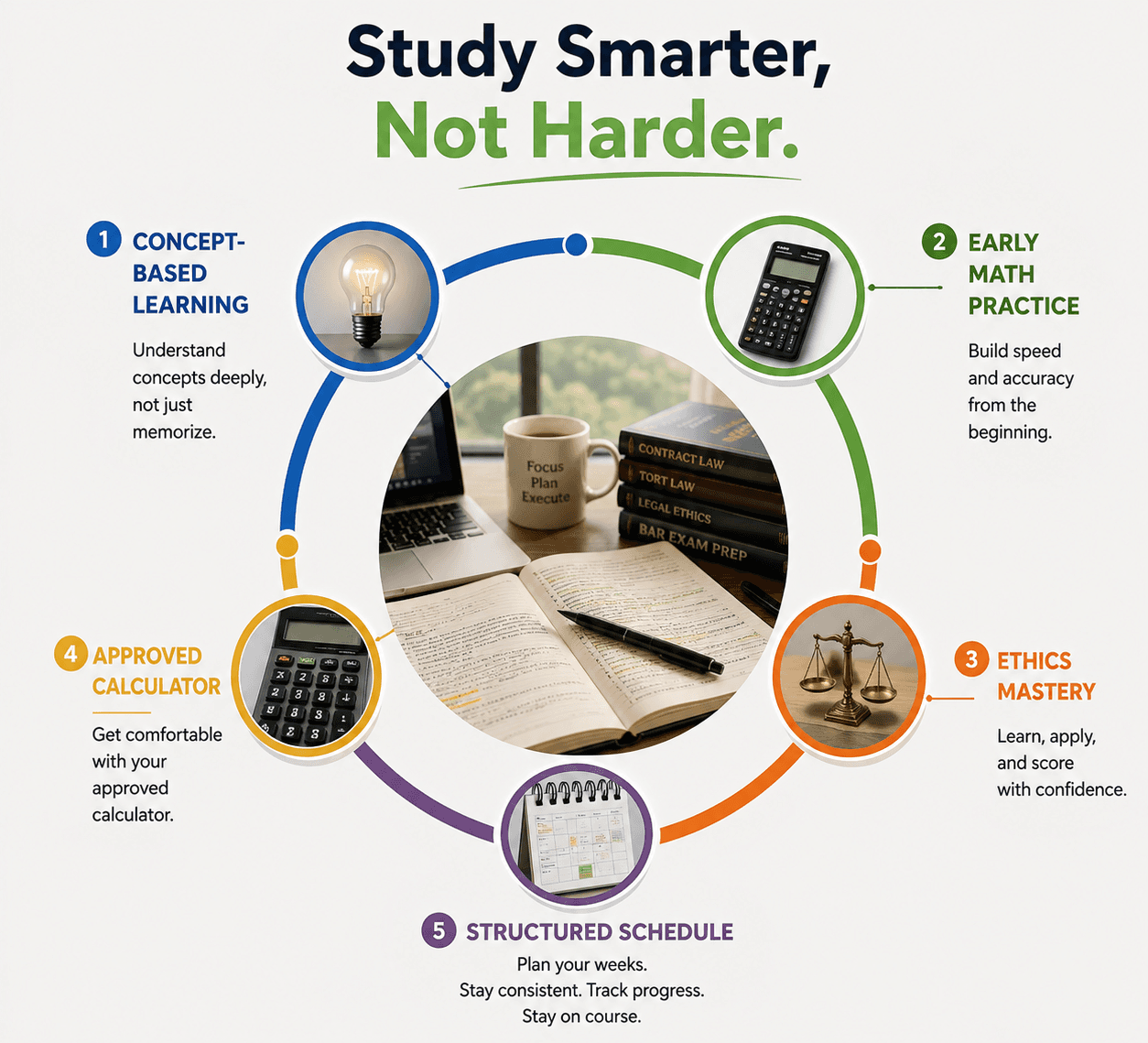
Passing the UBC real estate exam isn’t about studying harder — it’s about studying smarter. Most failures come from poor preparation strategies, not lack of ability. Focus on understanding concepts, practicing math early, mastering ethics scenarios, and following a structured study plan. With the right approach, every common mistake is fixable before exam day.
FAQs
What is the passing grade for the UBC real estate licensing exam?
What is the format of the UBC real estate exam?
How many attempts do I get at the UBC real estate exam?
How hard is the UBC real estate exam in BC?
Can I study for the UBC real estate exam while working full-time?
What topics are most heavily tested on the UBC real estate exam?
In this Article

This article is Written By
Samir Nathwani
A dedicated professional committed to supporting educational progress, program development, and learner success across various career pathways.


